Staying hydrated while fasting: a simple guide to water tracking

Fasting can change the shape of an ordinary day. A drink you usually have with breakfast may no longer be part of your morning, and the water in meals and snacks may be easier to overlook.
A small amount of awareness can help. You don’t need a strict drinking schedule or a perfect record. A simple water tracker app can make your intake easier to notice, while leaving room for your thirst, routine, and real-life plans.
Why fasting can change drinking cues
Many people drink water around familiar moments: with a meal, during a break, or while preparing something to eat. When a fasting window removes some of those moments, it can also remove the reminders to pour a glass.
There may be less water coming from food, too. Water-rich foods contribute to total water intake, so a day with fewer meals can look different from an eating day. And when your attention is on the clock or a new routine, it can be easy to forget what you have already had to drink.
That doesn’t mean everyone needs to drink more while fasting. Needs vary with the person, the day, activity, and weather. It simply means your usual cues may have shifted. Noticing that pattern is a calm place to start.
Water during a fasting window
For many common time-restricted intermittent fasting routines, plain water is a straightforward choice during the fasting window. Unsweetened tea is also generally considered compatible with a calorie-free fast, though definitions vary. If you’re following a specific fasting protocol, its guidance may differ. Everyday Health’s overview of drinks during fasting explains this distinction.
A medical fast is different. If you are fasting for a procedure, test, or another medical reason, follow the instructions from your care team about what you may drink and when.
The simplest approach for a typical intermittent fasting routine is to keep water available and drink to thirst. There is no need to force a large amount at once or “catch up” at the end of a fast.
Set a personal goal in ounces
A hydration goal can be a helpful reference, not a score to chase. If you’d like to set one, begin with what you usually drink on an ordinary day. You could log for a few days, notice your typical pattern, then choose an easy-to-use daily goal in ounces.
National Academies guidance is based on total water from food and all beverages, not just plain drinking water. Its reference figures reflect population intake patterns; they are not a precise requirement for every person. Activity, heat, and other individual circumstances can affect needs. The National Academies’ water chapter explains why there is no single intake level that fits everyone.
If you have a health condition or have been given fluid guidance by a healthcare professional, that advice should take priority over a general app goal. A personal goal can be adjusted as your routine changes.
Make the pattern easier to see

It’s surprisingly easy to overestimate or underestimate how much water you’ve had. Logging a glass when you pour it can be more reliable than trying to recall it later.
A hydration tracking app can make that small action simple. In Nourish, you can set a personal hydration goal in ounces, use quick-add buttons or enter a custom amount, and review weekly trends. The point isn’t to monitor every sip. It’s to give your memory a little support and make the general pattern clearer.
If you also choose to log caffeine, Nourish keeps that separate from water tracking. The National Academies notes that beverages containing caffeine can contribute to total water intake. Read its water guidance for more context.
Build the habit gently
You don’t need a complicated routine. A few low-pressure cues can make water easier to remember:
- Place water within reach. Keep a glass or refillable bottle where you tend to work, read, or relax.
- Pair it with something familiar. You might take a drink when you wake up, return from a walk, or sit down for a break.
- Log when it happens. A quick entry at the time is often easier than reconstructing the day later.
- Choose an amount that feels natural. Quick-add buttons can make a usual glass easy to record; custom amounts are there for different cups or bottles.
- Let a fresh day be fresh. If you forget to log, there’s no need to estimate or make up for it. Just return whenever it feels useful.
A few small entries can offer a clearer view without turning hydration into another obligation.
Let water fit your fasting schedule
Hydration and fasting are separate parts of a routine. Your water tracking can continue whether you choose 16:8, 18:6, 20:4, 5:2, or a custom schedule. The eating window changes; your opportunity to drink water does not need to follow a rigid rule.
With 16:8, for example, you might notice whether you naturally drink less during the morning when breakfast isn’t part of your routine. With 18:6 or 20:4, a quick log can help you see how beverage habits fit a longer fasting window. A 5:2 approach has a different rhythm across the week, so you may find it useful to observe whether your water routine varies between days. None of these patterns requires the same schedule for everyone.
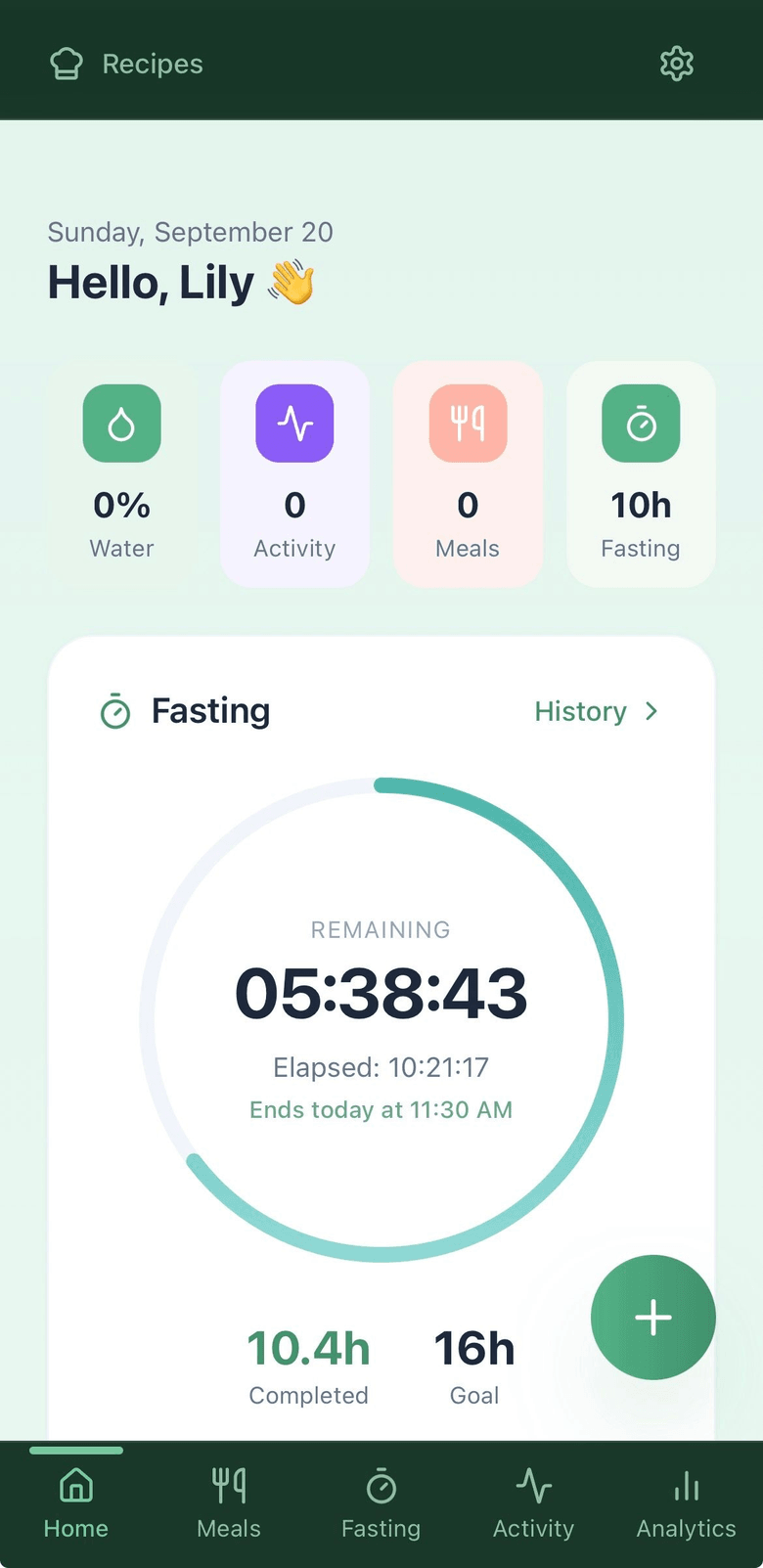
Nourish lets you choose a fasting plan or set a custom schedule, then track water alongside it. You can view those habits together without needing to follow someone else’s system.
Notice the pattern, not the noise
Tracking is most useful when it helps answer a simple question: what does my routine look like lately? A few days of entries may show that you drink more with meals, remember water after movement, or tend to forget during busy mornings. Those observations can help you choose what feels supportive next.
The numbers are not a judgment. A lower day isn’t a reason to overcorrect, and an imperfect record is still a record you can return to. More awareness. Less overwhelm.
Keep hydration supportive
For most people following a typical intermittent fasting routine, water is a practical choice during the fasting window. Drink to thirst, spread your intake through the day, and avoid treating any general reference figure as a personal rule. Your needs may shift with activity, weather, food, or health circumstances.
If you have a condition that affects fluid needs, take medication that influences hydration, or have been asked to limit fluids, check with a healthcare professional before changing your routine. Fasting may not be suitable for everyone, so it’s worth asking for individual guidance if you’re unsure.
Nourish is a wellness tracking tool, not medical advice. Its water tracker can help make a daily habit visible, with room to pause, adjust, and begin again. When it feels useful, explore Nourish’s tracking features or open the app. A clearer picture can begin with one simple note.