16:8 Intermittent Fasting Results: What to Expect Week by Week (and When It Starts Working)

Starting a 16:8 fasting routine can bring a mix of curiosity and uncertainty. When will you notice a difference? Is the scale supposed to change right away? What if some days feel easier than others?
There is no single timeline that fits everyone. Your response can depend on your starting point, food choices, sleep, activity, stress, medications, and how naturally the schedule fits your life.
A helpful way to think about 16:8 is not as a test to pass. It is a simple structure that may help you notice your eating rhythm, make more space between meals, and understand which routines feel supportive.
More awareness. Less overwhelm.
What 16:8 means
The 16:8 method involves a 16-hour fasting period followed by an 8-hour eating window. For example, someone might choose to eat between 10 a.m. and 6 p.m., then fast overnight until 10 a.m. the next day.
The timing itself is flexible. Some people prefer an earlier window, while others find a later schedule easier to live with. The most useful window is often the one that works with your sleep, work, family meals, and social plans.
Research suggests intermittent fasting can support weight loss for some people, but it does not appear to be consistently better than other approaches that create a similar calorie reduction. In other words, the eating window may be useful because it simplifies your routine, not because 16:8 guarantees a particular result.
A systematic review of intermittent fasting studies found weight loss across the trials it examined, while also noting that many studies were small or short-term. The experience can be helpful, but it is best approached with realistic expectations.
When does 16:8 start working?
There are a few different meanings of “working.”
You may notice less evening snacking before the scale changes. You may feel more familiar with your hunger patterns before your clothes fit differently. A week of consistent logging may reveal useful information even if your weight stays the same.
For many people:
- The first week is mostly about adjusting to a new rhythm.
- Weeks two through four may bring a clearer routine and more stable observations.
- Weeks six through twelve are a more reasonable window for noticing broader changes in weight, waist measurements, or clothing fit.
- Longer-term results depend on whether the routine remains comfortable and compatible with real life.
Daily weight can move up or down because of hydration, sodium, digestion, hormones, and other normal changes. A single weigh-in is only one moment. Looking at broader patterns can offer a calmer perspective.
1. Notice the first week
Week one: finding your rhythm
The first several days may feel less like a results phase and more like an adjustment phase. Hunger may appear at the times you usually eat. Morning routines can feel different. You may notice changes in energy, focus, or mood.
Some people see the scale move during the first week. Early changes are often influenced by water and glycogen, along with changes in food volume and digestion. They should not be interpreted as a precise measure of fat loss.
Instead, consider noticing:
- How the fasting window fits your sleep schedule.
- Whether hunger arrives at predictable times.
- How much water you are drinking.
- Whether your first meal feels satisfying.
- How your energy feels throughout the day.
These details can be more useful than trying to decide whether the plan is “working” after a few days.
If you experience persistent dizziness, weakness, confusion, or other concerning symptoms, pause and seek medical guidance. A fasting routine should feel supportive, not punishing.
2. Observe weeks two through four
Weeks two to four: seeing the pattern
By the second or third week, the schedule may start to feel more familiar. You may find that hunger is easier to anticipate. You may also notice whether your eating window leads to balanced meals or leaves you rushing to fit everything in.
This is a good time to look beyond the fasting timer. The quality and balance of your meals still matter. A nourishing eating window can include a variety of foods such as vegetables, fruit, whole grains, protein sources, healthy fats, and fluids.
You do not need to make every meal perfect. A simple meal that keeps you satisfied may be more useful than a complicated plan you do not enjoy.
Some people notice early weight trends during this period. Others do not. Both experiences can be normal. In a 2024 randomized trial involving adults with obesity and type 2 diabetes, participants following a 16:8 plan three days per week for three months lost weight compared with a control group. However, that study involved a specific population, dietary guidance, and medical context. Its results should not be treated as a promise for everyone.
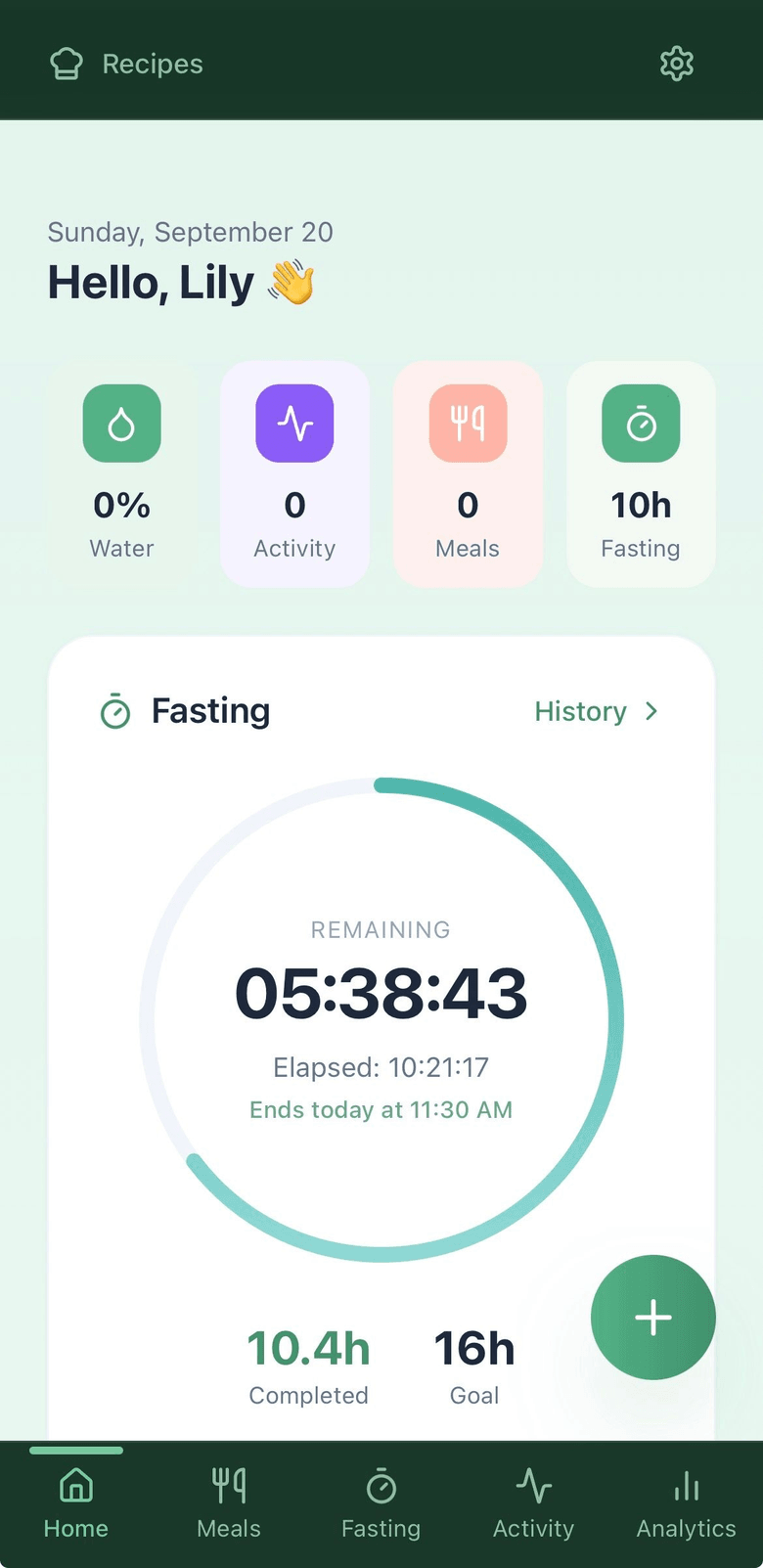
A closer look can help here. Nourish lets you log fasts, meals, water, caffeine, and movement in one place, so you can review the pattern rather than relying on memory.
3. Check in around weeks five to eight
Weeks five to eight: allowing changes to accumulate
Visible changes rarely happen on a precise schedule. If weight loss is your goal, a gradual trend over several weeks is generally more meaningful than a sudden shift in the first few days.
Around weeks five to eight, some people begin noticing:
- Clothes feeling slightly different.
- A more familiar appetite pattern.
- Less automatic evening eating.
- Greater awareness of portions and meal timing.
- More confidence choosing a schedule that feels natural.
These changes may be subtle. They may also have little to do with the number on the scale.
If you are tracking weight, consider using weekly or occasional check-ins rather than repeatedly measuring throughout the day. You might also track how you feel, how your clothes fit, or how consistently you are able to make choices that support your wellbeing.
Nourish’s Insights feature can help you view daily, weekly, and historical patterns. The goal is not to create another scorecard. It is to make the bigger picture easier to see.
4. Reflect after eight to twelve weeks
Weeks eight to twelve: choosing what continues
After two or three months, you may have enough information to decide whether 16:8 feels useful for you.
You might notice that it:
- Fits comfortably around your daily schedule.
- Helps reduce unplanned snacking.
- Makes meal planning feel simpler.
- Gives your evenings a clearer stopping point.
- Works well alongside movement and sleep habits.
You may also discover that another rhythm suits you better. A 14:10 schedule, a less frequent fasting routine, or no fasting schedule at all may be more supportive. There is no need to force a method simply because it is popular.
A 2020 review found that intermittent fasting produced weight loss across the studies examined, but results were broadly similar to continuous calorie restriction in direct comparisons. This is useful context. The best approach is not necessarily the most restrictive one. It is the one that you can revisit without feeling overwhelmed.
What helps make results more sustainable?
A fasting window is only one part of a wellness routine. These gentle foundations may make the experience easier to understand:
Choose a realistic window
A schedule that works on an ordinary Tuesday is often more useful than one that only works under ideal conditions. Consider your work hours, sleep, medications, family meals, and social life.
Make room for satisfying meals
A shorter eating window does not mean you need to rush or undereat. Meals with a mix of protein, fiber, carbohydrates, and healthy fats may help you feel nourished and steady.
Keep hydration visible
Water can be easy to overlook when your routine changes. Nourish’s hydration tracker lets you set a personal goal in ounces and log water with quick additions or custom amounts.
Notice caffeine
Coffee and energy drinks can become more noticeable when consumed without food. Logging caffeine may help you understand how timing and amount affect your day.
Leave room for pauses
A missed fast is not a personal failure. You can pause, edit a fast, start fresh, or choose a different schedule. Flexibility is part of building a routine that belongs to you.
Is 16:8 safe for everyone?
Intermittent fasting is not appropriate for everyone. Speak with a healthcare professional before starting if you are pregnant or breastfeeding, under 18, living with diabetes, taking medication that requires food or affects blood sugar, underweight, managing a chronic condition, or have a current or past eating disorder.
People taking insulin or certain diabetes medications may need specific medical guidance because fasting can increase the risk of low blood sugar. Do not change medication timing or dosage without speaking with your healthcare professional.
Stop and seek medical advice if fasting causes ongoing dizziness, fainting, severe weakness, confusion, or distress around food.
Nourish is a wellness tracking tool. It does not diagnose, treat, cure, or prevent any disease.
A calmer way to look at 16:8 results
The answer to “When does 16:8 start working?” may be different for each person.
You may notice a change in your eating rhythm first. The scale may change later. Visible differences can take several weeks or months. And for some people, the most valuable result is simply understanding their routine more clearly.
That is enough to begin.
Track what feels useful. Notice the pattern, not the noise. Return to the next supportive choice whenever you are ready.
Explore Nourish’s fasting, hydration, meal, activity, and habit features, or open the Nourish app when you want a simple place to begin.